
Preserving Flickr Archive with a Data Lifeboat
Two decades of press events, device launches and MWC show floors live in my Flickr archive. How I preserved it with a Data Lifeboat.

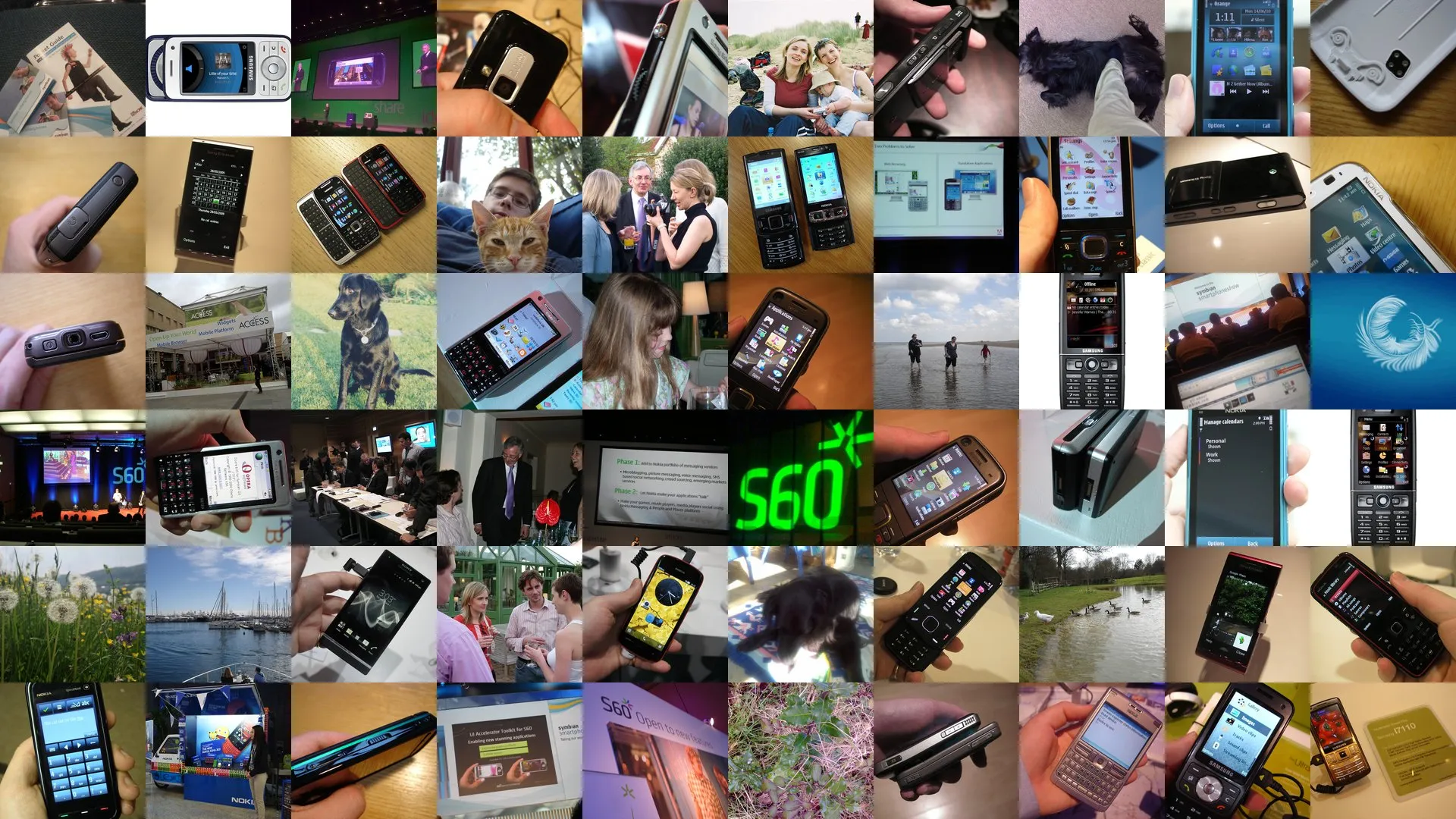
For a couple of decades I used Flickr as a working photo library — uploading from press events, device launches, Mobile World Congress, Nokia World, S60 Summits — and as a casual personal archive alongside that. The collection has been useful as a primary source: an exact record of what a Nokia 808 PureView looked like in someone's hand, what the keynote slides at MWC 2009 said, what the show floor at Nokia World 2010 felt like.
Flickr is healthier than it has been for a long time, but no service is forever. The platform changed hands twice (Yahoo, then SmugMug), changed its free-tier rules more than once, and at one point was rumoured to be on its last legs. So when the Flickr Foundation — a small non-profit spun out by SmugMug specifically to think about long-term preservation of online photography — opened up its Data Lifeboat service, I signed up.
What a Data Lifeboat actually is
A Data Lifeboat is a self-contained static export of a Flickr account. You pay (mine cost around £50), you choose which photos and metadata to include, and a few days later you get a ZIP containing:
- the original-resolution photo files
- thumbnails at multiple sizes
- metadata as plain JSON: albums, galleries, tags, descriptions, comments, dates, contributors
- a vanilla HTML/CSS/JavaScript viewer that runs entirely in the browser
- a cover page describing the collection
That's the important bit. There's no database, no server-side logic, no external dependencies, no proprietary viewer that can stop working when something changes. Open the cover page in a browser and you can browse the entire collection. Upload the folder to any web host and it's a public website. Hand somebody the folder on a USB stick in twenty years' time and — assuming they still have a web browser — they can open it.
It is, deliberately, the simplest possible thing that could work.
What I got back
For my account that turned out to be 3,947 photos and around 5.3GB of files, covering roughly 2005 to 2014 — the All About Symbian and All About Windows Phone years. Originals and thumbnails together come to about 5.2GB; the metadata and viewer together are a few megabytes.
To publish it on the open web I renamed the cover from README.html to index.html and updated the viewer's references to match (the only change the export's SHARING.txt instructions require). It then drops straight into the existing static site setup behind Caddy.
Why bother?
I already had the photos. They were on Flickr. Why pay for an offline copy?
Three reasons. First, control: my archive now lives on infrastructure I own, alongside the rest of the All About sites' archived content. If Flickr ever changes the rules in a way I dislike, it doesn't matter to the archive. Second, completeness: the Lifeboat captures everything Flickr knows about each photo — original titles, descriptions, comments, tags, album membership — in a form I can actually read without the Flickr UI in the loop. Third, format simplicity: a folder of static HTML and JSON is going to outlive any live web service. It's the same reason the rest of the All About archive is plain HTML rather than running on a CMS.
The Flickr Foundation's argument is that the act of making a Lifeboat is itself a form of curation — you have to think about what's in your collection and what you want preserved. I can confirm that's true. Going through 3,947 photos one more time, I noticed a lot of things I'd forgotten taking, and a few I'd forgotten existed.
The archive is now live at archive.rafeblandford.com/flickr/ and will stay there.
The Data Lifeboat service is documented at flickr.org/programs/content-mobilization/data-lifeboat/.
New writing by email
Occasional pieces on product, technology and AI — and how they actually play out in practice.


