
Evolving Products & Platforms
The story and operating model behind a decade of digital product transformation partnerships.

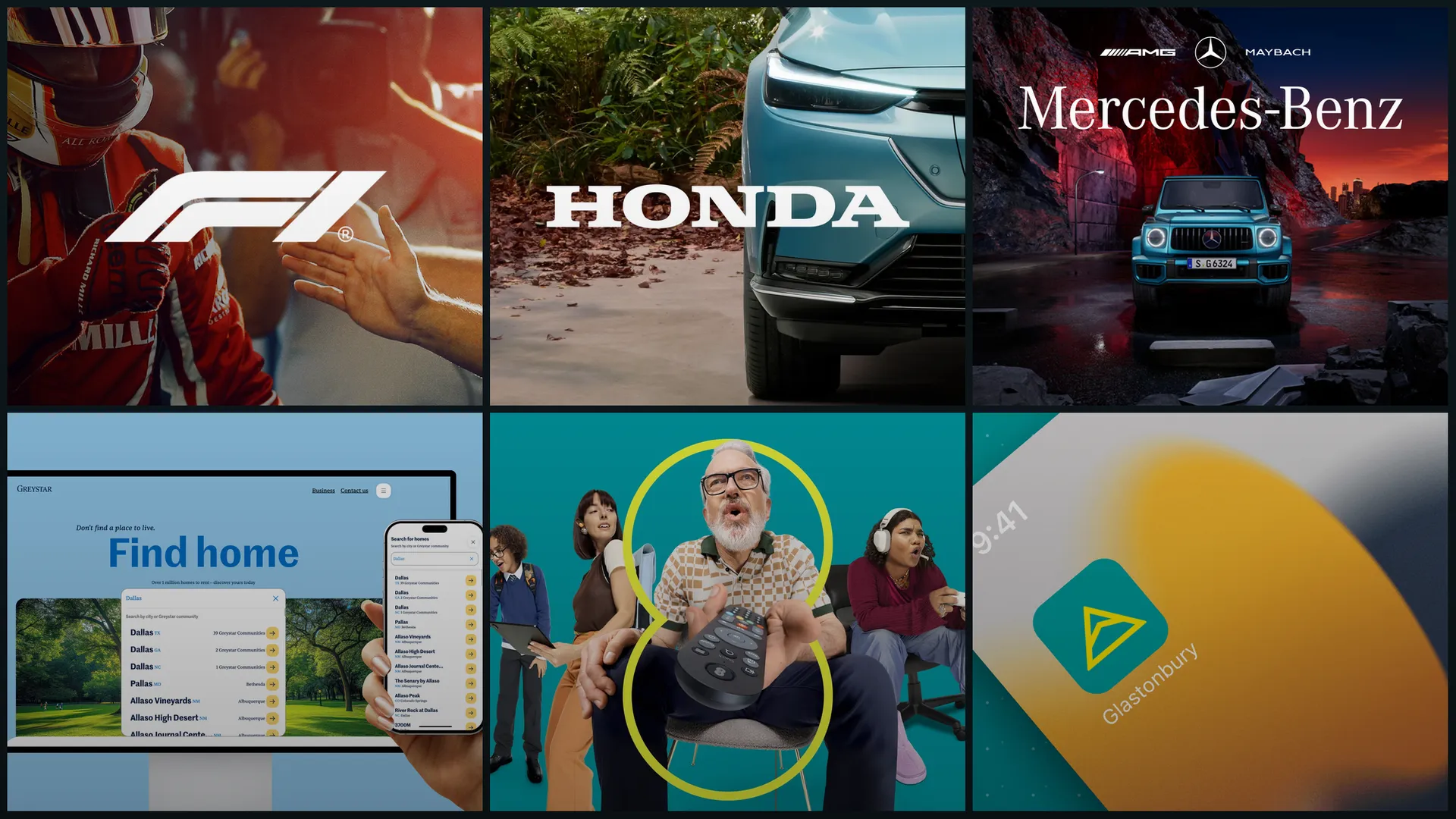
The operating model behind a decade of digital partnerships.
Most of the case studies here are about specific client work — Formula 1, Honda, EE, and more. This one is the high-level view: the machine that delivered them, and the shift to a product-led operating model.
In 2014, Digitas had a capable technology team, but it operated in classic agency silos — strategy, creative, and tech — delivering under a reactive "briefs in, builds out" model. As my leadership remit grew from 2016, and then formally expanded when I joined the executive team in 2018, my focus became shifting us from output-driven execution to outcome-led product partnerships.
Over a decade, we evolved the capability, Products & Platforms, into a 200+ person product, design and engineering organisation spanning the UK, India and Europe. A key element of this was treating Technology, Product, and Experience Design as strategic functions, not just as delivery enablement. The change happened through three key operating decisions.
The first was the "One Technology Team" initiative. That started by bringing professional services — consultancy and build — and managed services — operations and run — together. It created shared accountability across the product lifecycle, from consultancy through build to ongoing operation, under a unified culture and structure. In parallel, we scaled the same principle across geography, treating the onshore and offshore teams as a single organisation, rather than a centre with offshore capacity attached. The reasoning is simple: quality follows ownership, and nobody takes ownership of work that's been thrown over a wall at them. One team, wherever people were based.
The second was building "Product" as a discipline. There were no product managers when I started; we grew the craft from a standing start and organised our best work around product trios: product, experience design and engineering working as one integrated team rather than as stages in a linear process. That style of collaboration, and the outcome-oriented approach that goes with it, is nothing novel in the wider product world, but it was quietly radical in an agency, where work traditionally flows down a line from strategy to creative to production. I won't pretend the product-led operating model and thinking reached every corner. They were the ideal we scaled towards, not a universal reality, but the direction never changed, and where they took hold the difference was visible: small, stable teams that stay with a product carry context, push back well, and make good decisions. Clients noticed and projects became partnerships. Commercially, that meant structuring more work around persistent teams, product roadmaps and continuous run-and-improve relationships, rather than delivering an isolated build and dispersing the team. Bringing professional and managed services together made that continuity possible.
The third was a deliberate "Tech-Agnostic" philosophy: recommend what's right for the client's problem, not solutions we happened to resell. In practice that meant a significant spread of partners and a need for adaptable senior team members. We evaluated more than 30 platforms and solutions over the years, each against the same three questions: does it solve a real problem, can our team genuinely deliver with it, and does it stack up commercially? That discipline allowed us to make early, decisive bets on composable architecture and MACH principles long before they became mainstream. Crucially, it gave us the credibility to tell clients (and partners) when a solution wasn't right for them, building a level of trust that no vendor certification can buy.
Underneath all of it: the people and the culture. We hired for curiosity and care as much as competence, adopted lean product methods and worked to embed continuous improvement at every level. Bringing AI into how we design and build was an obvious recent example. This was driven by a leadership approach that I later articulated as "high standards, high humanity – ambitious for the work, and generous with each other", which I've written about elsewhere and believe is the best way I know to create the conditions for great outcomes.
Scope / Role
I led Products & Platforms (P&P) as a member of Digitas UK's executive leadership team for eight years (2018–2026), accountable end to end for a 200+ person product, design and engineering capability spanning the UK, India and Europe — while staying personally close to the client work itself.
- Capability strategy & orchestration — setting the direction for the capability and stewarding the system that gets the disciplines working as one: the operating model, the team and the culture beneath it, and the big strategic calls about where P&P should go.
- Technology & Product (the CTPO remit) — one role owning both what we build and why (product as a discipline, the "trio" way of working, outcomes over outputs) and how and with what (the agency-wide technology capability — architecture, technical governance, engineering standards, platform and partner strategy).
- Client leadership — executive sponsor for key client relationships, and hands-on at a deep level: meeting key clients regularly (e.g. Formula 1 fortnightly for the best part of a decade), making the hard calls and trade-offs, setting direction and solving the most difficult problems.
- Commercial — accountable for the overall commercial health, margin efficiency, and revenue performance of Products & Platforms. I shaped and signed off every commercial agreement across the capability — from major pitches to long-term enterprise renewals.
- Executive leadership — as one of the agency's executive leaders, helping steer the business beyond P&P: agency-wide growth and new business, culture and people (including a sustained commitment to diversity, equity, inclusion and belonging), and cross-agency initiatives such as AI adoption and the evolution of agency-wide capabilities and operating models.
Outcomes
- Strong client outcomes — creation of digital products used by more than 250 million people (see the details in the individual case studies) and contributed to hundreds of millions of pounds in incremental client revenue.
- Grew Products & Platforms — the agency's largest capability by revenue and margin, with the highest revenue per head, sustained year-on-year growth and consistent net new business.
- Built and kept a strong team — approximately 4% annual voluntary turnover (2019–2025) in Technology & Product, substantially below wider technology and agency benchmarks, with a senior leadership and overall structure built for succession rather than dependence on any one person.
- Sustained client partnerships — within a portfolio of major brands across automotive, energy, sport, finance and telecoms, several spanning a decade or more: Formula 1, E.ON and Honda among them.
- Capability transformation — established and scaled a product-led operating model across a 200+ person organisation spanning the UK, India and Europe, shifting its centre of gravity away from siloed, brief-led delivery. Made long-term platform bets (composable/MACH among them) through a tech-agnostic discipline that evaluated 30+ platforms and solutions.
- Awards and industry recognition – work recognised by BIMA, the DMA, the PMAs and Campaign.
The client work has its own case studies. This is the machine that built them and it was built with resilience, succession and longevity in mind.
See also "High Standards, High Humanity", an essay on why standards and humanity aren’t a trade-off, and how they compound when held together.
Working on something like this?
I'm always happy to talk product, platforms and partnerships. Get in touch or connect on LinkedIn.


